Tennis tournament software: what to buy, what to skip.
Running a club tournament? Here's what tennis tournament software actually needs to do, how the main options compare, and what Grex Social covers natively — brackets, round-robin, singles and doubles, seeding, entry payments and result confirmation.
Try Grex Social freeThe shortlist
Five things it has to do.
Most UK clubs run two or three tournaments a year — a summer open, a winter doubles, a members' championship. The admin burden isn't the on-the-day scoring; it's the signups, payments, draw changes after late dropouts, and chasing results afterwards. The software you pick should take those jobs off a volunteer. Here's the checklist, then an honest comparison of what's out there for UK tennis clubs.
Published by Grex Social. This guide compares our platform with the LTA's tournament tools using published product information. It is not an independent hands-on review.
- Draw generation — brackets or round-robin, seeded, with byes handled cleanly so odd entry counts don't break the sheet.
- Singles AND doubles — a tool that only does one is only half a tool for most clubs. Men's, women's, mixed, all under one event.
- Entry payments online — collect fees up front through the software, don't chase cash on the day or reconcile a bank statement.
- Result confirmation — self-service score entry with opponent confirm, not a secretary chasing WhatsApps across three courts.
- Separation of club events from LTA-sanctioned ones — different rules, different reporting; the right tool for each is rarely the same tool.
What good tournament software actually does.
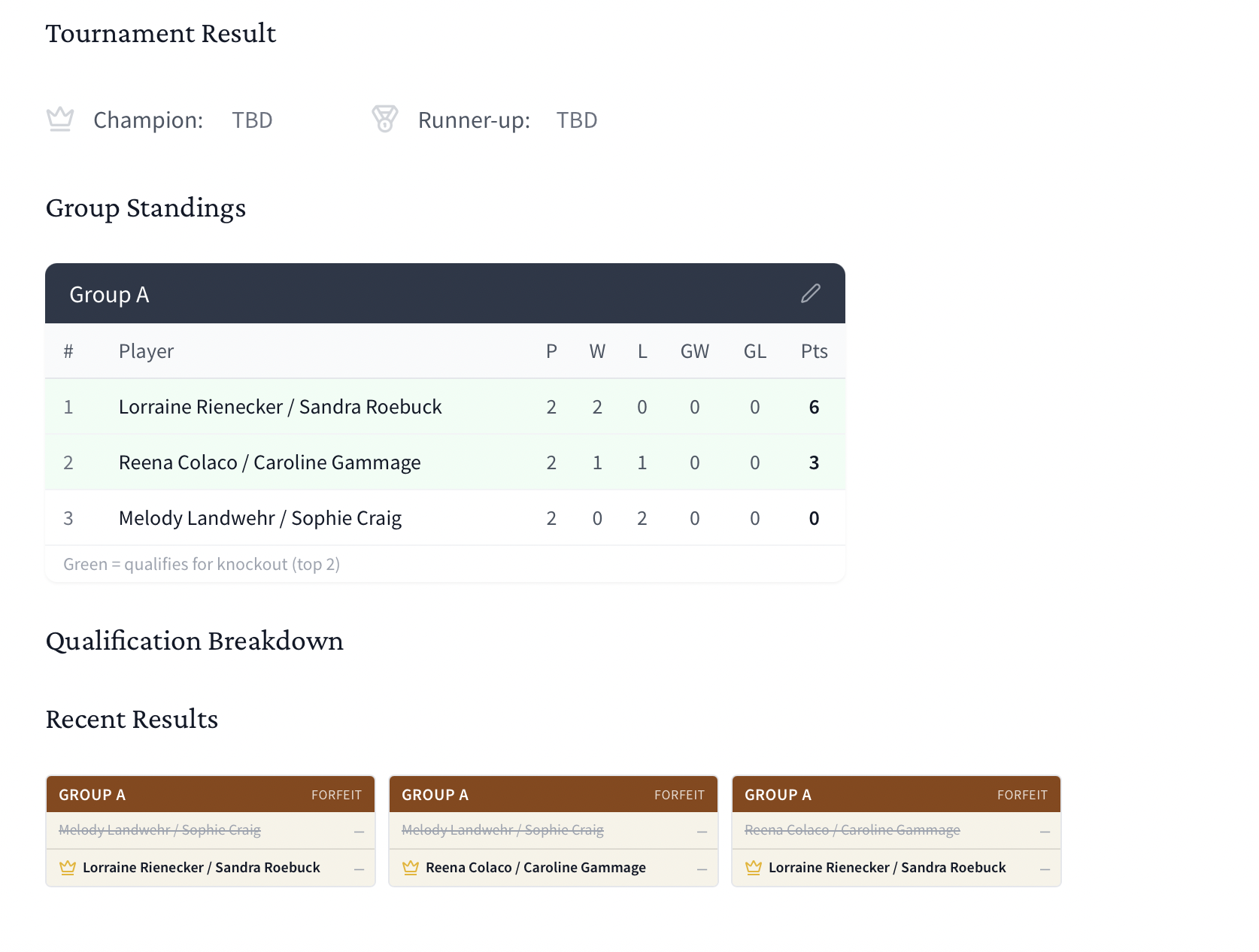
01 — Draws and formats
brackets, round-robin, groups-to-knockout.
Single elimination for the classic weekend knockout; double elimination when you want everyone guaranteed two matches; round-robin for a group stage; groups-to-knockout when the entry is big enough to split into pools before the final bracket. Seeding, byes and tiebreak order should all be built in — not solved on a spreadsheet after the draw.
- Single and double elimination brackets
- Round-robin groups with configurable scoring
- Groups-to-knockout for larger entries
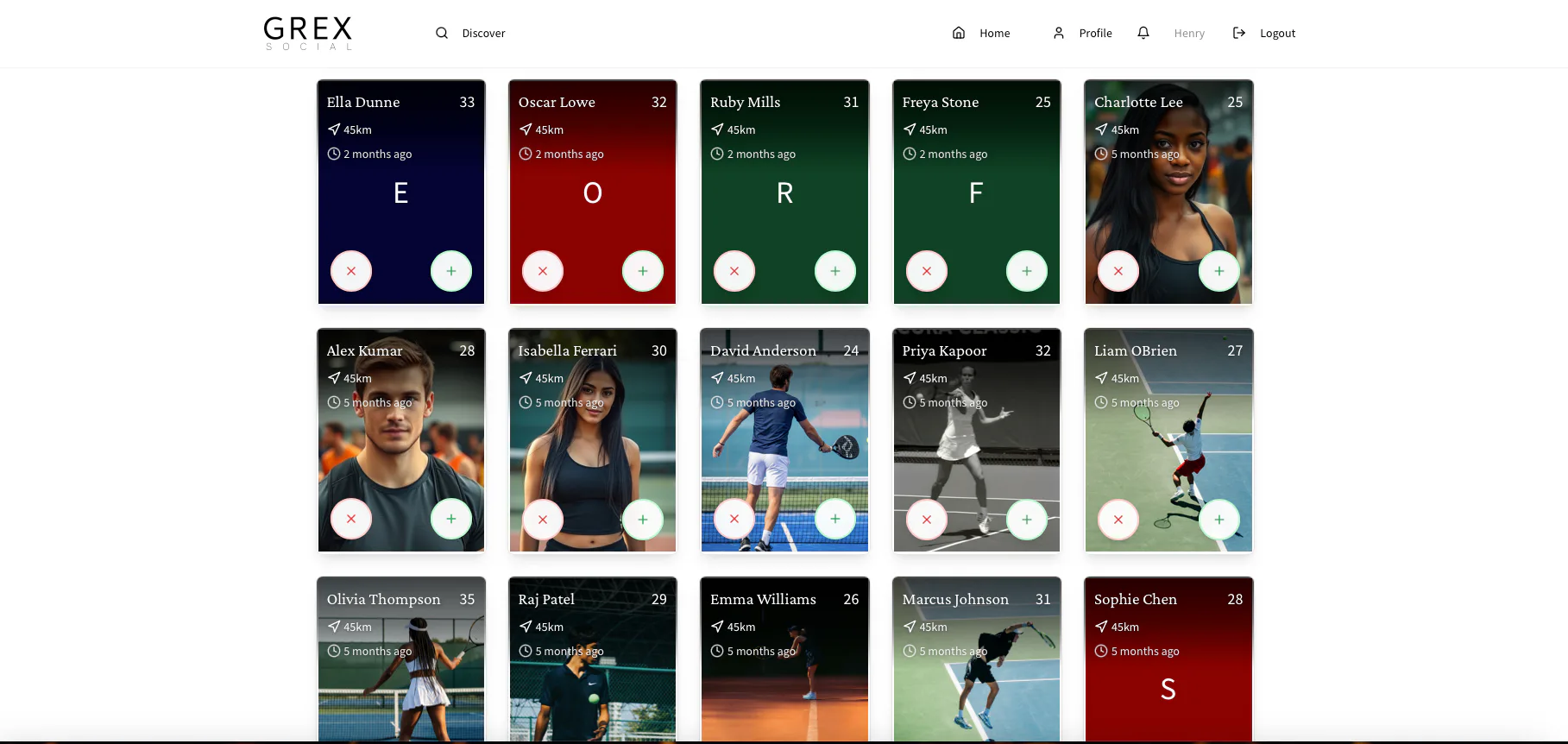
02 — Signups and payments
entry fees collected online, not in cash.
Signups should happen in the same tool that runs the draw, with waitlists and automatic promotion when a space opens. Entry fees should be collected during signup through a card payment and paid straight to the club bank — chasing cash on the day is the single biggest reason tournament admin takes an entire weekend.
- In-app signup with waitlist and auto-promotion
- Stripe entry fees paid straight to the club account
- Guest entries supported for open events
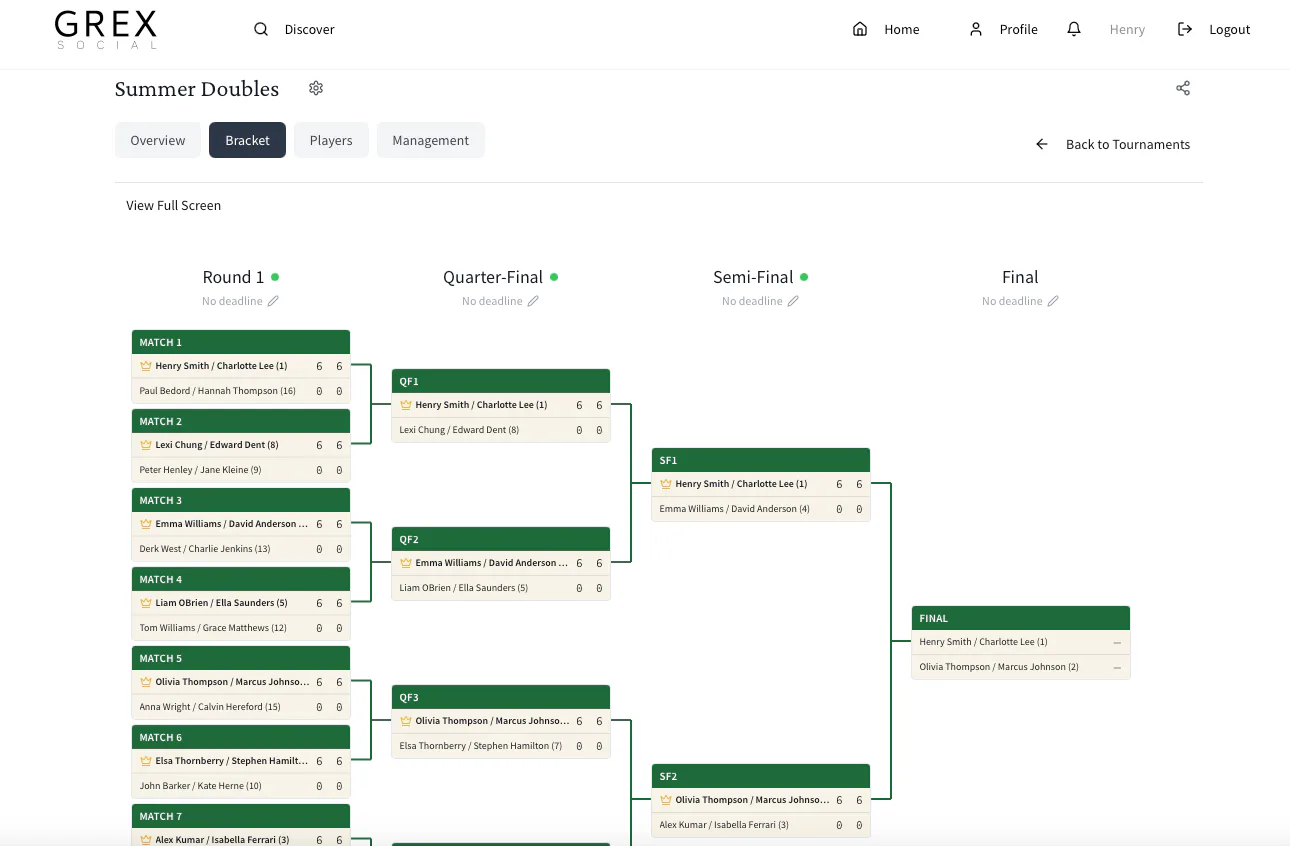
03 — On the day
live scores, no paper, no secretary bottleneck.
Players should enter their own scores on their phone and the opponent should confirm with one tap. The public bracket should update the moment both players agree. If every result still has to pass through a committee member sitting at a laptop, the software is doing less than half the job.
- Self-service score entry on mobile
- One-tap opponent confirmation
- Live bracket and standings update immediately
04 — After
standings, winners, and a series that carries over.
A good tool doesn't stop when the final is played. Winners should be announced in-app with the full bracket preserved as a public record. Results should feed a club-wide series or championship ranking so a strong summer open counts toward end-of-year standings — turning one-off tournaments into a season-long story.
- Public winner announcement and preserved bracket
- Series ranking across multiple tournaments
- Match history on every player's profile
Under the hood
What Grex Social ships for tournaments.
Built for internal club tournaments across UK tennis clubs — not an LTA sanctioning tool. The feature list below is what's live in the product today.
- Automated bracket generation — single elimination and double elimination draws built from the entry list in one click.
- Round-robin with groups-to-knockout — run a group stage then feed the top finishers into a knockout bracket automatically.
- Singles and doubles support — run them as separate events or combined under one tournament; men's, women's and mixed draws side by side.
- Automated seeding — pulls from existing member ratings and recent results; manual override is one click when the committee wants a say.
- Automatic bye handling — odd entry counts resolve cleanly without the organiser hand-placing phantom rounds.
- In-app Stripe entry fees — collected during signup, paid straight to the club's bank account; no cash tin on the day.
- Waitlists with automatic promotion — when a space opens the next player on the list is pulled in and notified automatically.
- Self-service score entry with one-tap opponent confirmation — results propagate the moment both players agree; no committee-member bottleneck.
- Live standings and bracket progression — winners advance the moment the result is confirmed; the public bracket updates in real time.
- Series / championship ranking — stack a season of tournaments into a single club-wide leaderboard so winter and summer events feed one ranking.
- Court booking is built in — the same platform runs the courts the tournament plays on, so slots don't double-book.
- Free for players; paid club plans — Club £39/mo (up to 500 members) or Club+ £69/mo (unlimited members), both with a 30-day free trial. No per-event fees.
The alternatives
What else is out there.
LTA Tennis Tournament Planner (TTP). The LTA says TTP is free for venues and organisers, and it covers internal club tournaments as well as sanctioned events — entries, draws and scheduling. If all you need is a draw tool and your club already runs its payments, member comms and events elsewhere, TTP is a credible choice at no software cost. Its sibling tools in the LTA stack (Competition Management System, Results Manager) handle the official reporting pathway through to WTN, with their own eligibility requirements — check the LTA's guidance for which organiser categories can access each.
Manual spreadsheets. Zero software cost, zero automation. A typical club secretary burns 10+ hours per tournament on draws, scoring, result-chasing and reconciliation, and payments still have to be collected on the side by bank transfer or in cash on the day. Fine for a very small internal event; painful at any real scale.
Grex Social. Built for internal club tournaments as part of a wider club platform. Brackets and round-robin, singles and doubles, Stripe entry fees to the club bank, self-service scoring with opponent confirm, waitlists, and series ranking across the year — all in one system alongside members, groups, events and court booking. Not an LTA sanctioning tool; results don't feed WTN. If your club wants a draw tool only, LTA TTP is a legitimate free alternative; the Grex Social case is the wider club workflow, not the draw itself.
FAQ
Common questions.
What is tennis tournament software?
Tennis tournament software is the digital tool a club or organiser uses to run a tournament end-to-end: entry and payment collection, seeding, draw generation (bracket or round-robin), scheduling, live scoring, standings and winner publication. The best tools cover singles and doubles, handle byes and walkovers cleanly, and let players enter scores themselves rather than funnelling every result through a committee member.
What formats does tennis tournament software need to support?
At minimum: single-elimination brackets, double-elimination brackets, round-robin groups, and groups-to-knockout (group stage feeding into a bracket). Doubles support is non-negotiable for most clubs — any tool that only runs singles covers less than half of what a typical club actually schedules in a season. Seeding, bye handling and tiebreak configuration should all be built in rather than bolted on with spreadsheets.
Does Grex Social support LTA-sanctioned tournaments?
No. Grex Social is built for internal club tournaments — your club's summer open, winter doubles, members' championship — and does not sanction events with the LTA or feed into the national rating system. For LTA-sanctioned competitions, the official LTA pathway (Competition Management System for sanctioning, Results Manager for results submission, Tennis Tournament Planner for the draw) handles the end-to-end flow. Internal club tournaments don't need any of that — Grex Social or the LTA's free TTP both work. Many clubs run both: Grex Social for the internal calendar, LTA tooling for the one or two sanctioned events a year.
Will tournament results update the ITF World Tennis Number?
No. Grex Social does not integrate with WTN or the LTA's rating system — internal club tournaments run on Grex Social are standalone events. If WTN updates matter to your players, use the LTA pathway (Competition Management System and Results Manager) for the sanctioned events that should feed national ratings. Grex Social and the LTA stack can run side by side — one isn't a replacement for the other.
Can I collect entry fees through tennis tournament software?
On Grex Social, yes. Entry fees are collected during signup via Stripe and paid straight to the club's bank account — no cash tin, no reconciliation, no chasing people on the day. The amount is set per event; refunds for withdrawals are handled in the admin screen. Not every tool does this: Tournamentsoftware's core product is draw management rather than payments, and manual spreadsheet setups typically push payment collection into a separate bank-transfer or Treasurer-managed flow.
How does Grex Social compare to the LTA's tournament tools?
The LTA stack covers sanctioned-event administration end-to-end: entries and draws via Tennis Tournament Planner (TTP, free for venues and organisers, usable for internal events too), results submission via Results Manager, and sanctioning via the Competition Management System. If you're running an LTA-sanctioned event with results feeding WTN, use the LTA pathway. If you only need a free draw tool for internal tournaments, TTP alone is viable. Grex Social is the right choice when the tournament sits inside a wider club workflow — members, groups, events, entry payments and court booking in one platform — rather than being a standalone draw to administer.
Can I run both singles and doubles at the same club?
Yes. Grex Social lets you run singles and doubles tournaments in parallel, including men's, women's and mixed draws under the same event. Doubles signup can be as a fixed pair or as an individual entering a pool to be partnered — the admin picks per event. Byes and seeding apply to doubles pairs the same way as to singles entries.
What's the difference between a tournament and a box league or ladder?
A tournament is a time-bounded event with a draw and a winner — a weekend or a couple of weeks, bracket or round-robin, trophy at the end. A box league groups players into small boxes and runs over a fixed round (6-8 weeks) where everyone plays everyone in their box. A ladder is a continuous ranked list where players challenge upward. Tournaments are for one-off competitive events; box leagues and ladders are for ongoing year-round play. Grex Social runs all three. See our box league guide and club ladder guide for the alternatives.
How much does tennis tournament software cost?
Costs vary. The LTA says Tennis Tournament Planner (TTP) is free for venues and organisers — no software cost for the draw tool itself. The LTA's sanctioning path (CMS, Results Manager) has its own eligibility and may carry fees for sanctioned events; check the LTA's current guidance. Grex Social is £39/month on the Club plan (up to 500 members) or £69/month on Club+ (unlimited members), both with a 30-day free trial and no per-event fee — unlimited tournaments across the year are included. Players enter free; entry fees you charge are collected through Stripe straight to the club bank (Stripe processing fees apply). Manual spreadsheet setups have zero software cost but typically burn 10+ volunteer hours per tournament on draws, scoring and reconciliation.
Can non-members enter a club tournament through this software?
Yes, on Grex Social you can open an event to guests as well as members — useful for open tournaments where you want to attract prospective members or non-affiliated players. Guests pay the entry fee in-app through Stripe just like members. Admins can also restrict events to members only when the tournament is internal.
Can we keep our existing court-booking system?
Yes. Grex Social has court booking built in, but it works alongside whatever your club already uses. If you want Grex Social for tournaments, members, groups, events and payments but want to leave your court booking on ClubSpark or another system, that's a supported setup — you choose the scope. Many clubs start that way and migrate court booking later, if at all.
What happens if a player drops out mid-tournament?
In a bracket, Grex Social's walkover forfeit awards the match to the opponent and advances them to the next round in one click — no manual re-bracketing. In a round-robin, the withdrawn player's remaining matches resolve as walkovers to each unplayed opponent. Byes on odd entry counts are placed automatically at draw generation. The admin screen shows every walkover and forfeit so the record is auditable afterwards.
What software do UK tennis clubs actually use for internal tournaments?
The honest answer: a mix. For LTA-sanctioned events, clubs use the LTA stack (TTP for the planner, CMS for sanctioning, Results Manager for results). For internal club tournaments it's more fragmented — many clubs run on spreadsheets and WhatsApp, some use TTP (free and perfectly capable for internal draws), some use ClubSpark's basic competition tools, and some use purpose-built platforms. Grex Social sits in that last group: built specifically for internal club events with entry payments, self-service scoring and series ranking as one system — the wider club-workflow case, not the draw tool case. Our summer tennis tournament guide walks through the format decisions in more detail.
Ready to run your next club tournament?
Free to try and every club gets a 30-day free trial of Club.