How to run a club ladder.
Challenge or rung format, three movement models to pick from, and how Grex Social keeps the ladder alive without the admin.
Try Grex Social freeThe playbook
Five moving parts.
A club ladder is one of the simplest, most flexible ways to give members ongoing competitive play. Members challenge others above them; winners rise. Simple in theory — but ladders die fast if the rules are ambiguous, inactivity isn't handled, or the top gets stagnant. This guide covers the format from setup to season-end, and how Grex Social keeps the ladder alive automatically.
- Pick a format — traditional challenge ladder for smaller clubs, or rung ladder (groups of 3–5) for larger ones. Singles, doubles, or separate ladders.
- Choose a movement model — Swap (winner takes loser's spot), Bump (winner moves up one, everyone between shuffles), or ELO points (rating-driven). Pick one; each rewards different behaviour.
- Publish clear challenge rules — how far up players can challenge (3 places is standard), acceptance windows, play deadlines, walkover handling.
- Handle inactivity firmly — auto-demote non-responders, allow unavailable-declarations, and remove players who miss too many rounds. Inactivity is what kills ladders.
- Run in seasons, not forever — 8–12 week seasons keep momentum. Season-end prizes (top rank, biggest climber, most matches) drive engagement past the top three.
A step-by-step walkthrough.
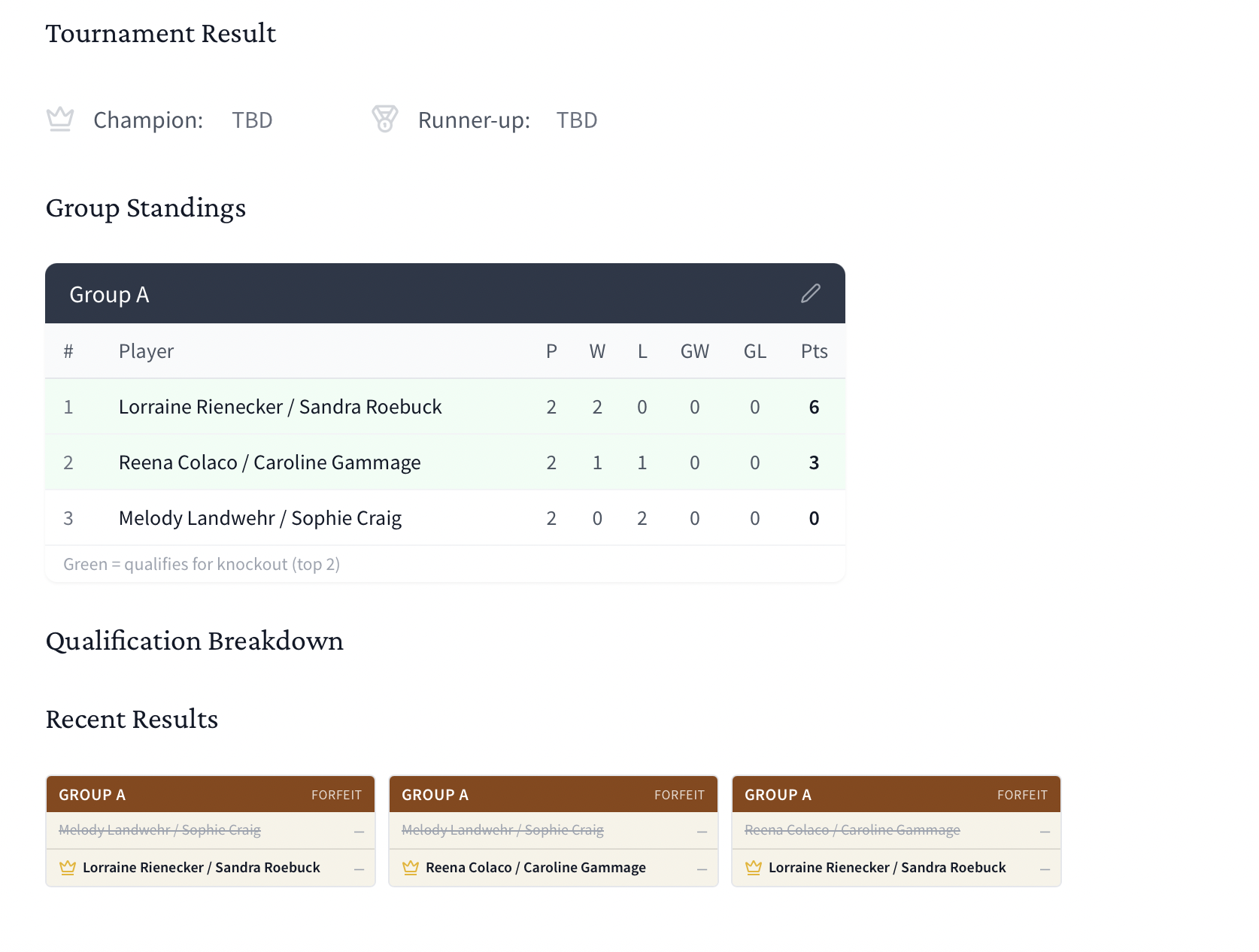
01 — Pick the format
challenge or rung ladder.
A single-list challenge ladder works well below 30 players — flexible, low admin, players challenge whoever they want. A rung ladder groups players into rungs of 3–5 who play round-robin; it scales better past 30 and produces closer matches. Pick based on club size.
- Traditional challenge ladder — single ranked list, best for <30 players
- Rung ladder — groups of 3–5, better for larger clubs
- Separate ladders per category (singles, doubles, gender, skill)
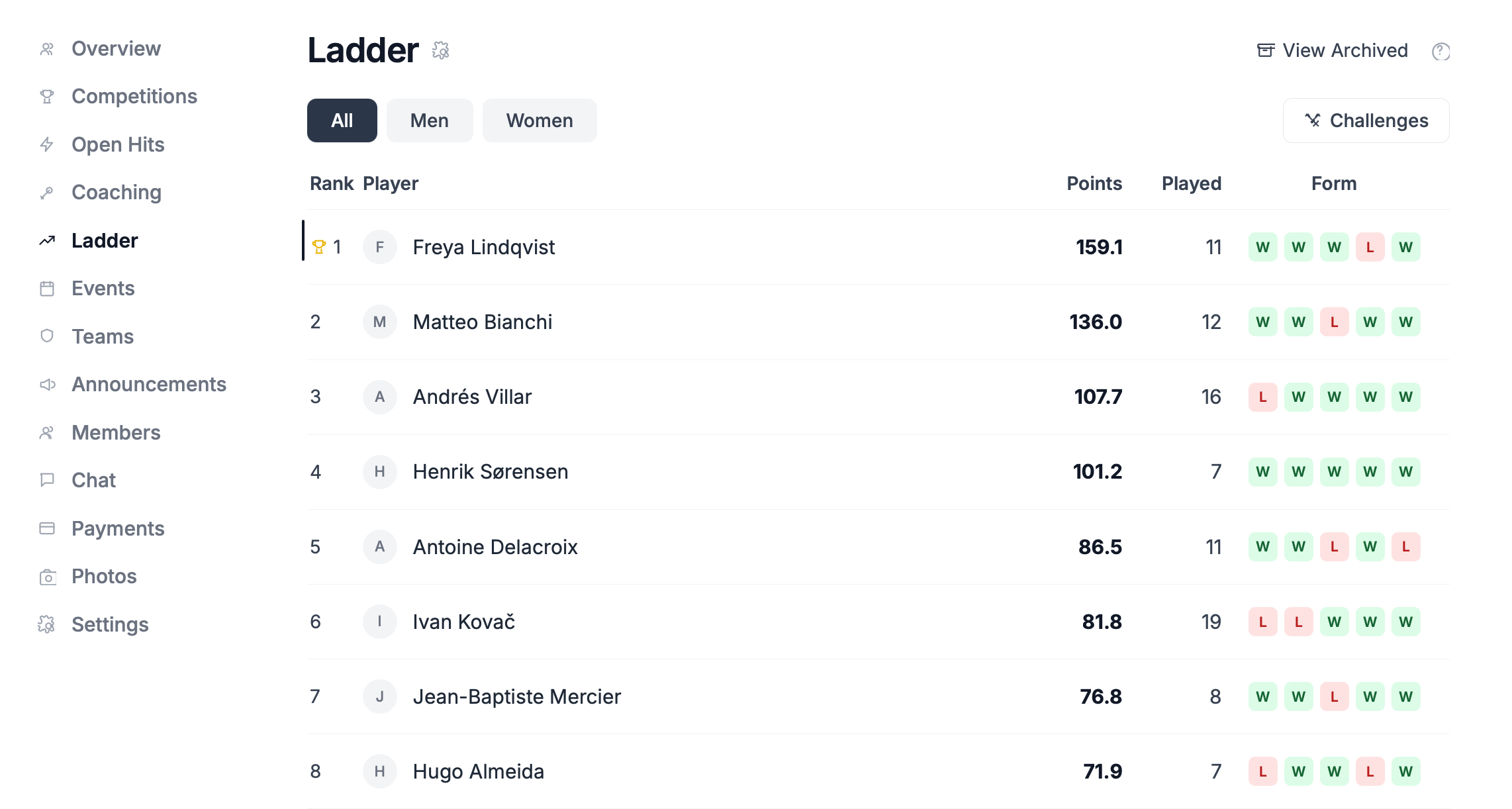
02 — Choose a movement model
Swap, Bump or ELO.
Three ways the ladder shifts after each result. Swap: winner takes loser's spot, loser drops to challenger's old spot. Bump: winner moves up one, everyone between shuffles. ELO: rating-driven, no positional ladder — best for larger clubs with irregular schedules. Grex Social supports all three.
- Swap — cleanest, best for smaller ladders
- Bump — more movement per match, feels dynamic
- ELO points — rating-driven, best for irregular schedules
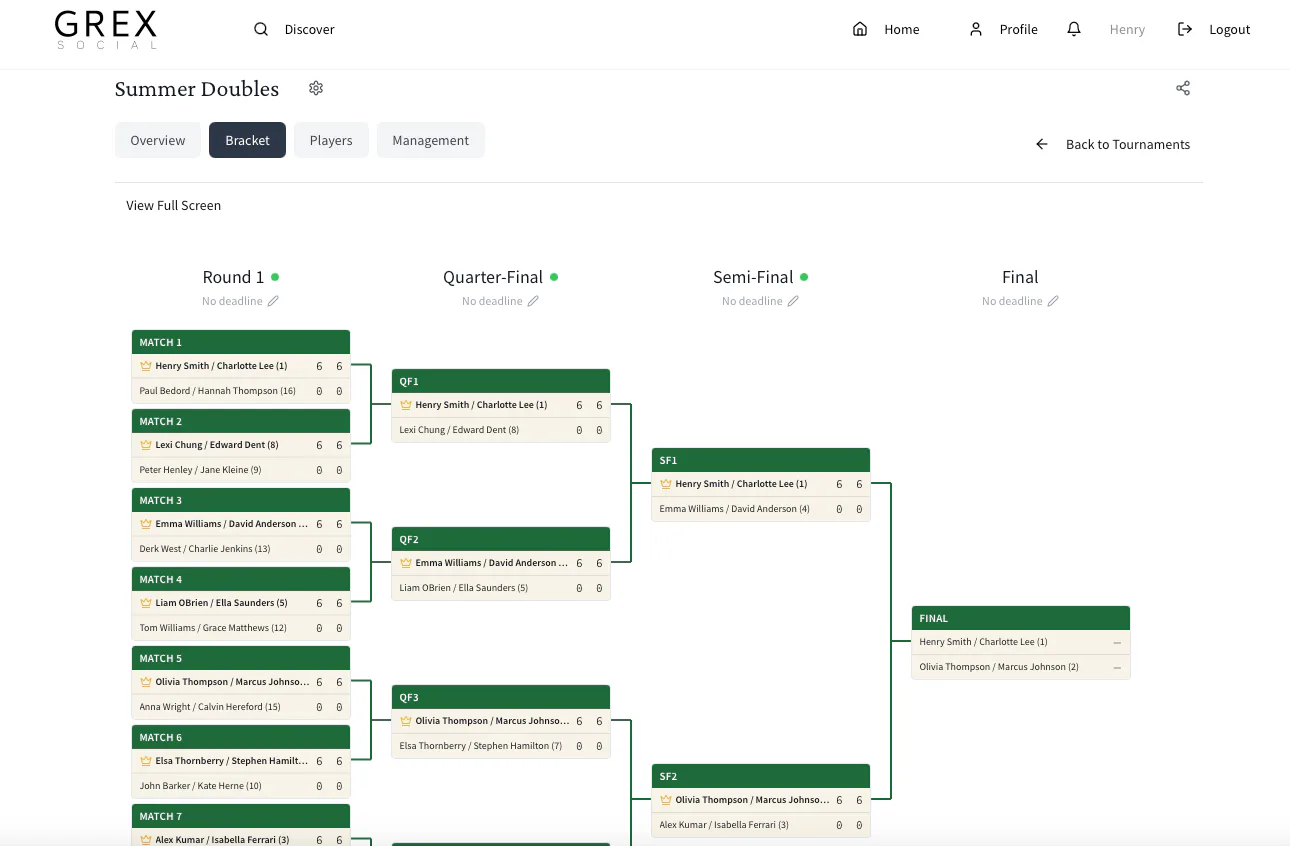
03 — Publish challenge rules
one page, zero ambiguity.
How far up can players challenge (3 places is standard). Acceptance window (48–72 hours). Play deadline (7–14 days). Walkover rules. Match format. Publish once, reference forever — ambiguous rules are what kill ladders halfway through the season.
- Challenge distance: 3 places above is standard
- 48–72h response window, 7–14 day play deadline
- Winner reports; opponent confirms
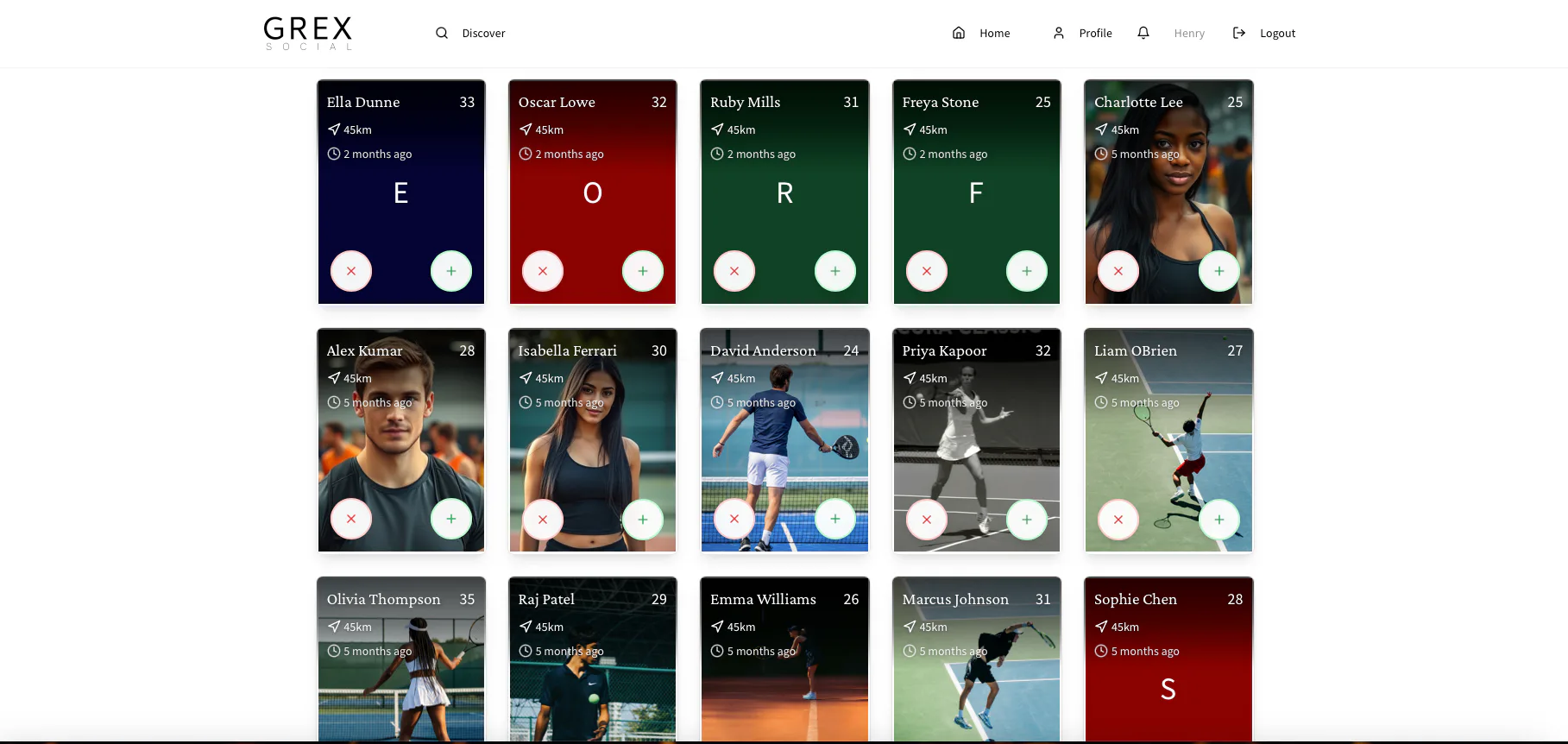
04 — Handle inactivity firmly
the top can't be a fortress.
Ladders die when players sit on a rank they refuse to defend. Auto-demote non-responders, allow legitimate unavailability declarations, and remove players who miss too many rounds. Grex Social applies your inactivity rules automatically so the organiser doesn't have to chase.
- Auto-demotion after N days without a defended challenge
- Unavailable-declarations pause the deadline
- Inactivity flags surface before they clog the ladder
Under the hood
What Grex Social gives you.
- Live ladder rankings — auto-updated the moment a match result is confirmed.
- One-tap challenges — players challenge in-app; opponent gets a notification + response deadline.
- Automatic challenge expiry — challenges timeout per rules you set, so unresponsive players don't block the ladder.
- Availability calendar — players declare availability windows so match arrangement is friction-free.
- Match score submission + opponent confirmation — disputes surface before results are locked in.
- WhatsApp or email reminders for challenges, deadlines, and season milestones.
- Match history + head-to-head records — every player has a full record for tiebreakers and season summaries.
- Monthly awards — most active player, biggest climber, longest winning streak. Configurable prizes.
- Separate ladders by category — singles, doubles, mixed, gender, skill level, sport — all in one club.
- Season structure with promotion / relegation — for rung ladders, top-of-rung goes up, bottom drops down at season end.
- Nine sports supported — tennis, padel, pickleball, squash, running, cycling, golf, CrossFit, Hyrox.
- Feeds the group ladder automatically with round-stage multipliers so tournament + ladder results contribute to a rolling ranking.
FAQ
Common questions.
What's the difference between a challenge ladder and a rung ladder?
A challenge ladder is a single ranked list where players challenge others above them individually — flexible, works for any club size but especially good below 30 players. A rung ladder groups players into rungs of 3–5 and everyone plays everyone in their rung over a fixed period; the top player moves up, the bottom down. Rung ladders scale better past 30 players and produce closer matches, but need more admin. Grex Social supports both.
How far up should players be allowed to challenge?
Three places above is the standard rule — it keeps matches close to competitive but stops sandbagging (players sitting on a rank they can defend indefinitely). Some clubs allow four or five places for larger ladders. Below three tends to feel too restrictive; above five means unrealistic mismatches.
Swap or Bump — which movement model is better?
Swap (winner takes loser's spot; loser drops to challenger's old spot) is cleaner and easier to understand — best for smaller ladders. Bump (winner moves up one, and everyone between shuffles down one) creates more movement per match, feels more dynamic, and is better for larger ladders. ELO points (rating-driven, no positional ladder) works best for clubs with irregular playing schedules and 50+ players. Grex Social supports all three.
How do you handle players who don't respond to challenges?
Publish the rule before season starts. Standard approach: 48-72 hours to respond; 7-14 days to play; if the challenged player doesn't respond, the challenger wins by walkover; if they respond but repeatedly can't schedule, the organiser awards the walkover after two attempts. Grex Social automates the deadline tracking and flags stale challenges without organiser hunting.
How long should a ladder season run?
8–12 weeks is the sweet spot. Shorter than 8 and there isn't enough movement for the ladder to feel meaningful; longer than 12 and momentum drops off as players plateau at their level. Many clubs run four seasons a year (Spring / Summer / Autumn / Winter) so there's always a fresh reset on the horizon.
Should the ladder reset between seasons?
Partial reset works best for most clubs — top 10 seeded from last season, everyone else re-mixed. Full resets feel more equitable but lose the sense of accumulated achievement. Grex Social supports both approaches; you pick per-season what percentage of players carry rank over.
How does a ladder differ from a box league?
In a box league, players are grouped into boxes and everyone plays everyone in their box over a fixed round — guaranteed match count, promotion/relegation at round end. In a ladder, there's a single ranked list (or rungs) and players challenge others individually — continuous play, no guaranteed match count. Box leagues suit clubs that want structured rounds; ladders suit clubs that want ongoing challenge play. Many clubs run a box league in-season and a ladder in the off-season. Also see our box league guide.
How do I keep players active on the ladder?
Three levers: (1) award participation points, not just wins — a player who plays every week but rarely wins should still climb slightly. (2) Publish monthly mini-awards (biggest climber, most active, longest winning streak). (3) Auto-demote inactive players so the top isn't stagnant. Grex Social builds all three in — participation-weighted scoring, monthly award tracking, and inactivity handling per rules you set.
Do I need to be an LTA-affiliated club to run a ladder?
No. Ladders are internal club competitions — no LTA rating or affiliation required. Grex Social's ladders work for any club regardless of governing body, and support nine sports beyond tennis: padel, pickleball, running, cycling, golf, gym, CrossFit and Hyrox.
Ready to run your club ladder?
Free to try and every group gets a 30-day free trial of Club.