How to run a box league.
From format choice to promotion and relegation, and how Grex Social eliminates the volunteer hours.
Try Grex Social freeThe playbook
Five moving parts.
A box league is one of the most effective ways to give club members regular, competitive matches without turning up on a fixed night. It's also one of the most admin-heavy competitions to run by hand — draws, standings, reminders and promotion decisions eat a committee member's evenings for the whole round. This guide covers the format from format-choice to finals, and how Grex Social automates the fiddly bits.
- Pick a format — box size, singles or doubles, round length, match format. Keep it simple for the first round.
- Seed the players — group by ability so every match is close. Use existing club ratings, recent results, or a short opening round.
- Publish a one-page ruleset — challenge window, response deadlines, scoring, walkover handling, tiebreaks. Ambiguity kills leagues.
- Track scores without spreadsheets — self-service score entry, live standings, automatic reminders so slipped matches don't stall the round.
- Promote and relegate cleanly — reset boxes at round end so every match matters into next round. Inactive players drop automatically.
A step-by-step walkthrough.
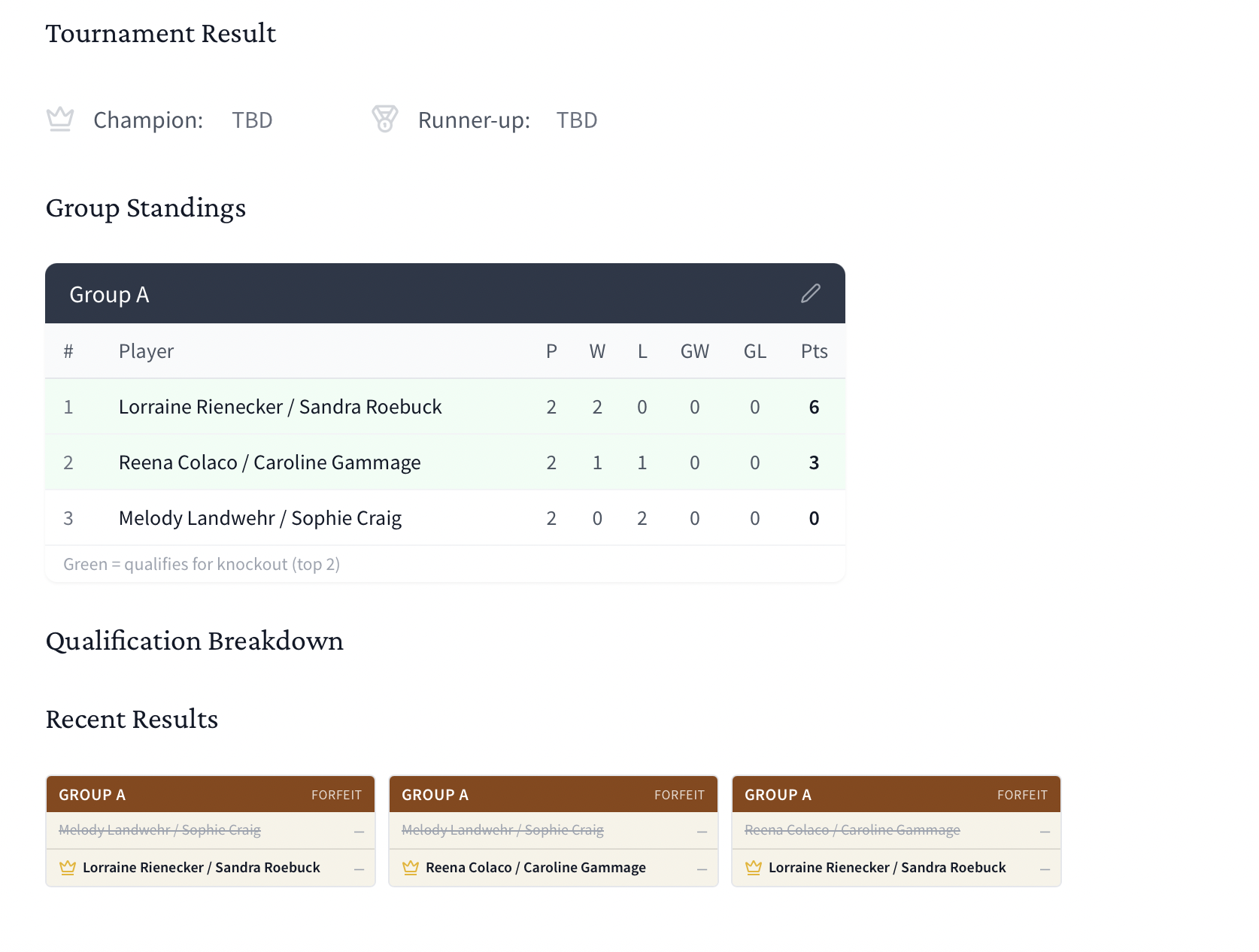
01 — Pick the format
box size, match format, round length.
4–6 players per box, 6–8 week round, and a match format that fits the round length. Best-of-3 short sets or two FAST4 sets plus a championship tiebreak both work well. Consistency matters more than the specific format you pick.
- 4–6 players per box balances round length and player count
- 6–8 week rounds keep momentum without stalling
- One clear match format — best-of-3 sets, FAST4, or timed
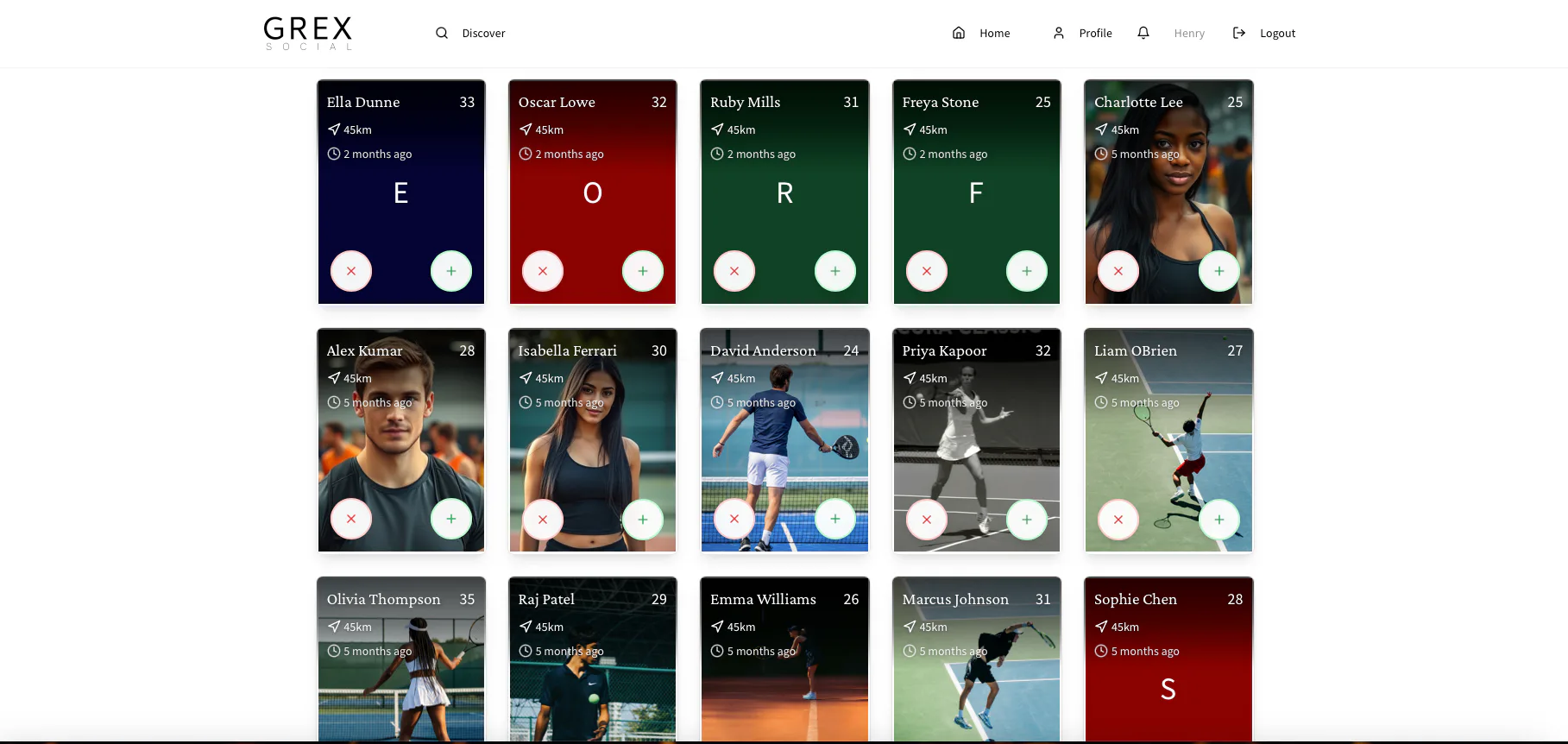
02 — Seed and enter players
group by ability, not order of signup.
Use existing club ratings, recent competition results, or a short opening round to seed the first cycle. Get this right and every match is close; get it wrong and one player dominates every box. Grex Social pulls seeding from members' existing ratings automatically.
- Skill-level seeding avoids one-sided matches
- Auto-generated boxes from your member list
- Late entries slot into lower boxes without disrupting the round
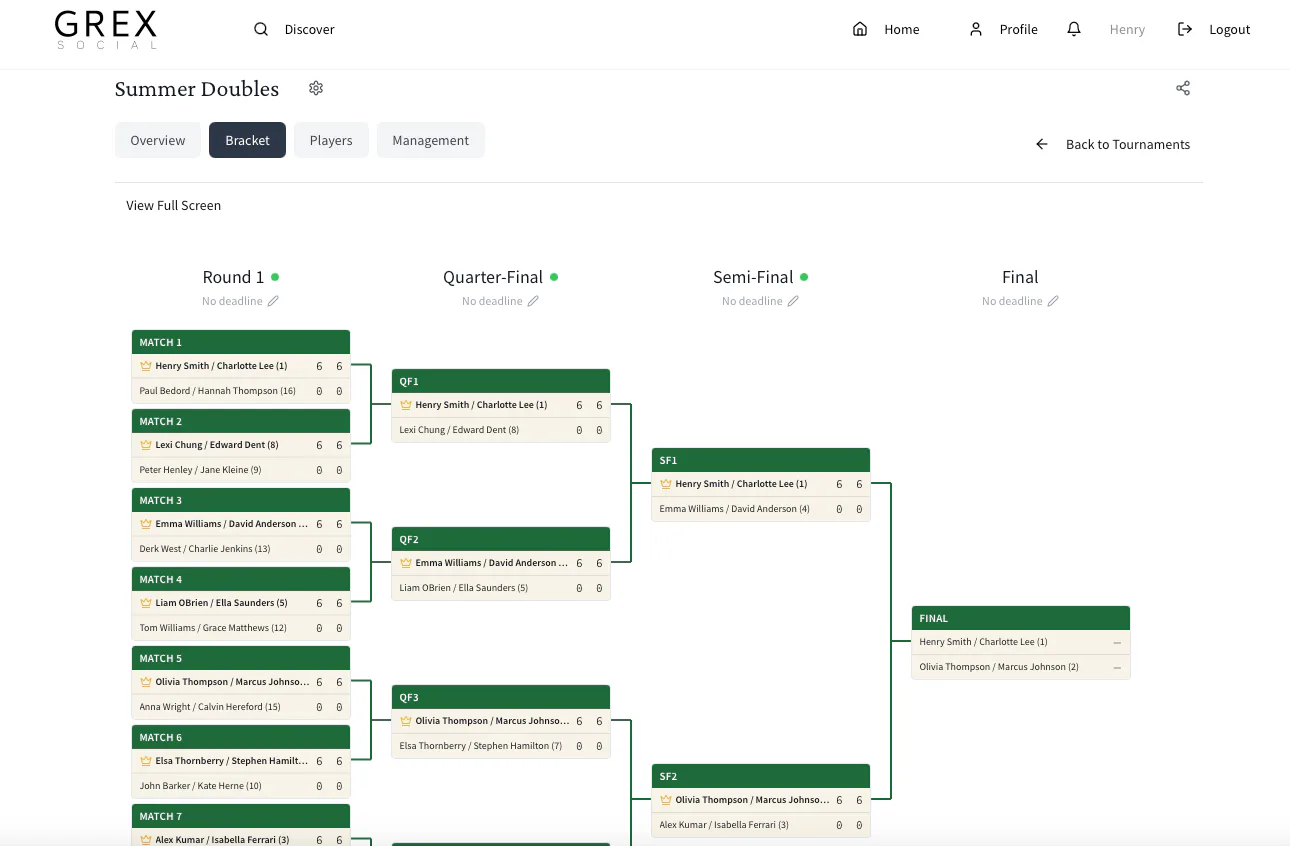
03 — Publish the ruleset
one page, no ambiguity.
Every player should see the same rules — challenge window, response deadlines, match format, scoring, walkover handling, tiebreak rules. Publish once, reference forever. Ambiguity is what kills leagues halfway through the round.
- Response deadlines (usually 7 days) + play deadlines (usually 14)
- Clear walkover and no-show rules
- Tiebreak order — head-to-head, sets ratio, games ratio
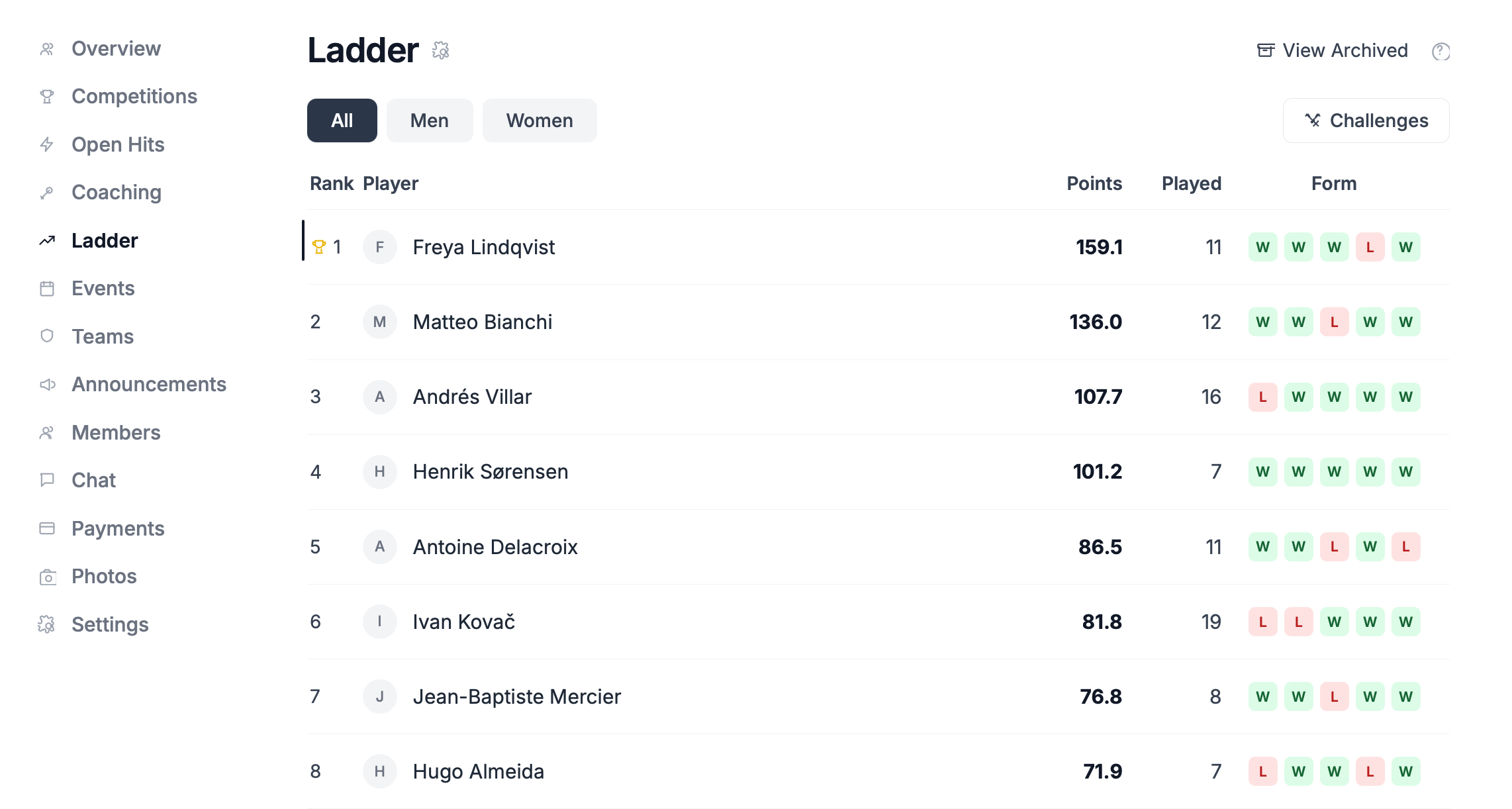
04 — Promote, relegate, restart
preview the movement before you commit.
At round end, top players move up, bottom players move down, middle players usually stay. Grex Social's Next Round Preview shows every box side by side with movement icons (↑ / ↓ / =) so admins see the full draw before finalising — and can swap two players inline if the auto-computed movement isn't right. Once you're happy, one click promotes everyone and generates the next round as a pending draft.
- Next Round Preview with movement icons + inline swap
- Top N promoted, bottom N relegated per your rules
- Walkover forfeit auto-resolves mid-round withdrawals
- Results feed the club ladder for a rolling ranking
Under the hood
What Grex Social gives you.
- Automatic box generation — feed a list of members and skill levels, Grex Social builds balanced boxes.
- Self-service match scheduling — players see their opponents and contact them in-app; no organiser-in-the-middle.
- Multiple match formats — standard sets, Fast4 (first to 4 games, championship tiebreak at 3-3), or timed. Score validation adapts to the format you pick.
- One-click score submission with opponent confirmation — the entry form prefills to your box and participant, so most members log a result in a couple of taps.
- Live standings auto-updated — table refreshes the moment a result is confirmed.
- Walkover forfeit for mid-round withdrawals — one click marks a player as withdrawn; all their unplayed matches auto-resolve with opponent wins. No manual re-scoring across the box.
- Late-add approvals — admins can approve additional players into boxes even after matches are scored, so keen stragglers still get a season.
- Next Round Preview with movement icons + inline swap — admins see every promotion, relegation and hold before committing to the draw, and can swap two players inline if the auto-computed movement isn't right.
- Auto promotion and relegation at round end — top N up, bottom N down, middle stays. Configurable per league.
- Inactivity handling — no-shows and non-responders are demoted automatically per rules you set, so the ladder doesn't clog.
- Deadline reminders — email + in-app, so slipped matches don't stall the whole round.
- Ratings that feed the next round's seeding — players who over-perform get promoted to appropriate boxes without you doing the maths.
- Built for racquet sports — tennis, padel and pickleball. Box leagues work naturally for the formats these three sports play.
- Match history + head-to-head records — every player has a full record, useful for tiebreakers and club rankings.
- Previous Rounds archive — completed rounds preserved as read-only for reference; restore boxes if you need to.
- Feeds the group ladder automatically — box-league results contribute to a rolling club-wide ranking, so a strong season shows through into next.
- Championship mode stacks a season of box leagues + tournaments + ladders into a single club-wide leaderboard.
FAQ
Common questions.
How many players should a box league have?
Aim for 4–6 players per box. Fewer than 4 makes the round too short; more than 6 makes it hard for players to complete every match inside the round. A club of 30 members typically runs 5–6 boxes of 5. Grex Social generates the boxes automatically from your entry list once you set the box size.
How long should a round last?
Six to eight weeks. Any shorter and players struggle to arrange matches around holidays and weather; any longer and momentum drops off. A firm deadline plus mid-round reminders keeps a round moving. Grex Social sends automatic reminders halfway through and one week before the deadline.
What scoring system should I use?
The most common systems: (1) award 3 for a win, 1 for a loss, 0 for a walkover given — rewards playing over sitting on results. (2) 1 point per set won plus a bonus for the match — rewards close matches. (3) Match-wins only, with head-to-head as tiebreaker — cleanest but harder on losers. Pick one and stick with it for the whole round. Grex Social supports all three; you set the rules once and the standings calculate automatically.
How do I handle unplayed matches at the end of the round?
Publish the rule before the round starts. Common approach: if both players tried to arrange but couldn't, award no points. If one player repeatedly didn't respond, award the walkover to the available player. If neither responded, mark the match void. Grex Social flags stale matches automatically so you can apply the rule without hunting through spreadsheets.
What happens if a player drops out mid-round?
Grex Social's walkover forfeit handles it in one click. From Box Management, the admin marks the player as withdrawn; all their unplayed matches auto-resolve — the withdrawn player scores 0 and opponents receive standard win points. No manual re-scoring across the box, no chasing every remaining opponent individually. Late-add approvals also let you bring a replacement into the box after matches are already scored.
What match format should I use?
Standard best-of-three sets works well for clubs with plenty of court time. If your club is time-pressured, **Fast4** (first to 4 games per set, championship tiebreak at 3-3) fits more matches into shorter slots — good for weekday evenings or busy weekends. Grex Social supports both, plus timed formats, and score validation adapts automatically to whichever format you pick per league.
What's the difference between a box league and a ladder?
In a box league, players are grouped into boxes and everyone plays everyone in their box over a fixed round. In a ladder, there's a single ranked list and players challenge others above them individually. Box leagues are better for guaranteeing multiple matches; ladders are better for continuous play. Grex Social runs both — many clubs use a box league during the season and a ladder in the off-season. Also see our club ladder guide for the alternative ongoing format.
Can I run box leagues for doubles as well as singles?
Yes. Grex Social supports singles, doubles and mixed doubles box leagues. Doubles boxes usually have 4 pairs (6 matches per pair per round) which fits the same 6–8 week window as a singles box. You can also run parallel men's, women's and mixed box leagues at the same club.
How much volunteer time does running a box league take?
Manually, a committee member typically loses an evening a week to draws, reminders and score chasing during a round. Grex Social eliminates most of that: box generation, standings, reminders and promotion/relegation are automated. A club chair running box leagues on Grex Social generally reports 30–60 minutes total per round of admin, compared with 20–40 hours on a spreadsheet-and-WhatsApp setup.
How does promotion and relegation work?
At round end, the top players from each box move up, the bottom players move down, and the middle player usually stays. In a 5-player box you'd typically promote 1–2, relegate 1–2, hold the rest. Grex Social auto-applies your promotion rules the moment the round closes and generates the next round's boxes from the new standings.
Do I need to be an LTA-affiliated club to run a box league?
No. Box leagues are internal club competitions — no LTA rating or affiliation is required. Grex Social's box leagues work for any club regardless of governing body, across tennis, padel and pickleball.
Ready to run your first box league?
Free to try and every group gets a 30-day free trial of Club.