Tennis Mexicano: rules, format, how to run one.
Social doubles that stays competitive. Partners rotate every round, and players re-group between courts by score — so every match is at your level, all night.
Try Grex Social freeThe 30-second version
Five things to know.
Mexicano is for clubs that want social doubles to stay a real match. Partners rotate every round, and after every round the whole field is re-sorted by score — top players on Court 1, next best on Court 2, and so on. You get Americano's social variety with tournament-style level balance.
- Re-grouped by score every round — top scorers meet top scorers on Court 1, next-best on Court 2, and so on. Matches stay close all night.
- Partners still rotate — each round pairs you with a new partner within your court, so you never play with the same partner twice.
- Individual scoring — every player carries their own game total across rounds. Highest individual total wins the night.
- Best for mixed-ability groups who want it competitive — Mexicano's re-grouping means everyone plays at their level after round 1, unlike Americano's random mix.
- Needs at least two courts — one court is Americano, two or more is Mexicano. Four courts (16 players) is the sweet spot; most tennis clubs can run it comfortably.
Sibling guides: Americano tennis · King of the Court tennis · Box league guide · Club ladder guide.
How to run a Mexicano night.
01 — Pick the format + round rules
court count, round length, round count.
Confirm how many courts you'll use (Mexicano needs at least two; most tennis clubs can comfortably run 4-6), how each round ends (first to 4 games is standard, ~20 minutes a round), and how many rounds fit in the night. A typical 2-hour club night runs 5-6 rounds. Grex Social takes the court count and round count in the event setup, and each match plays to a points total (16, 24 or 32 between the two pairs) rather than a games target.
- At least two courts (8 players); ideal is 4 courts (16 players)
- First to 4 games keeps round length predictable at ~20 min
- 5-6 rounds fits a standard 2-hour club night
02 — Open signups, take entry fees
members and guests, paid in-app.
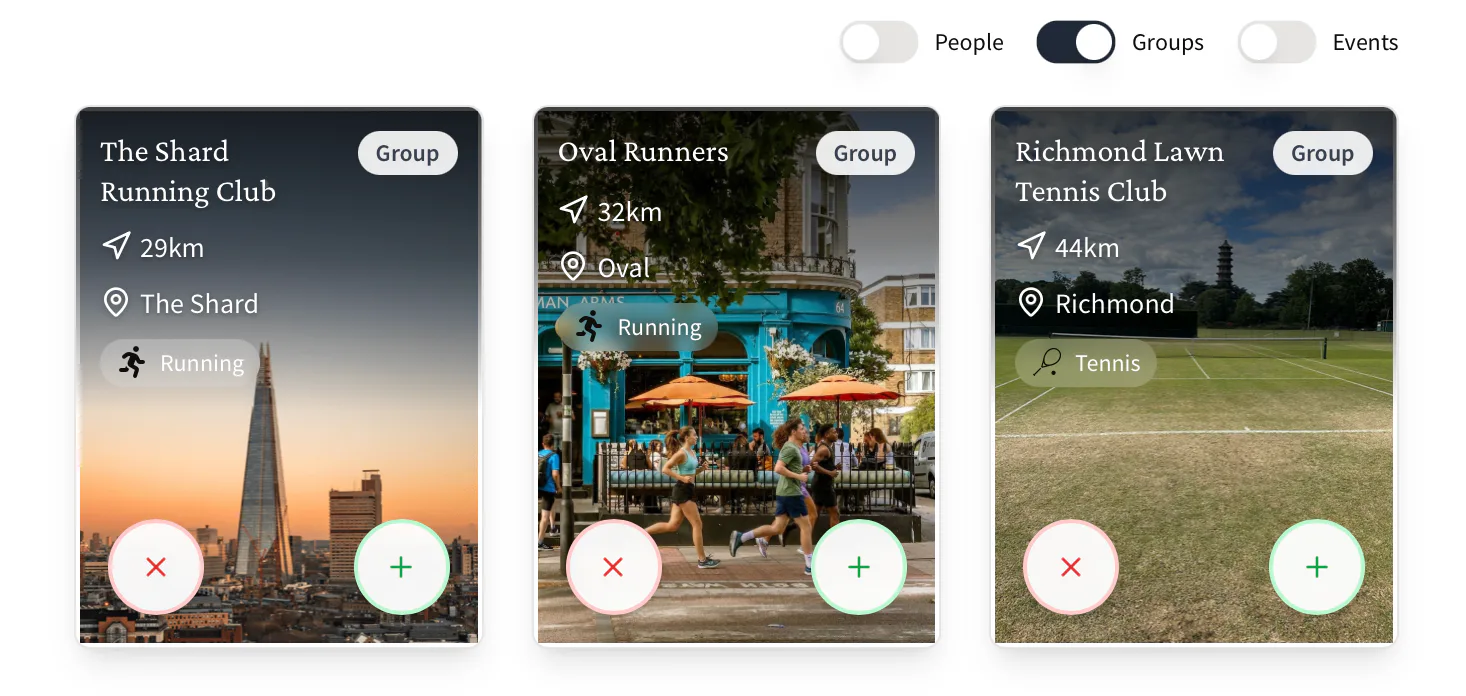
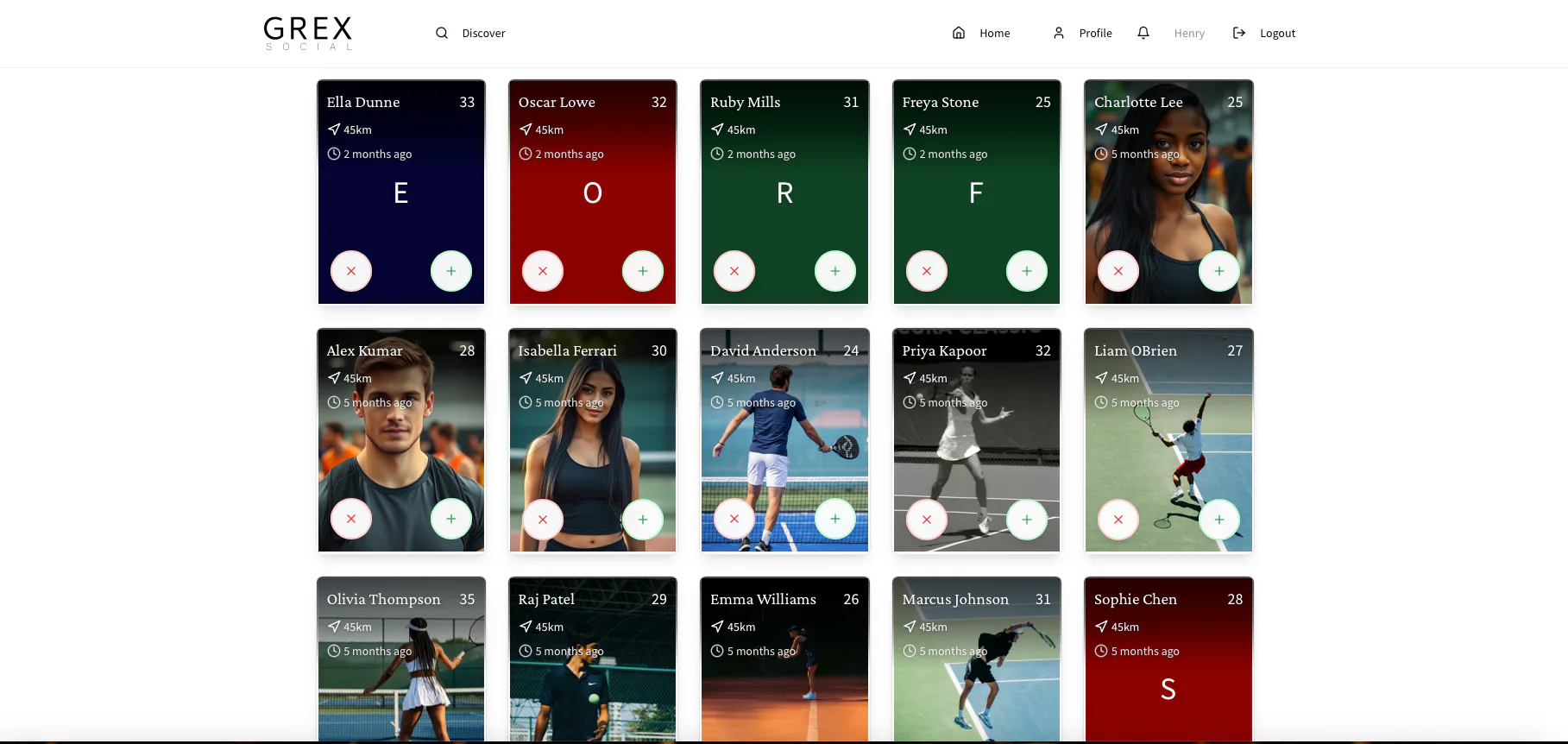
Open the event to members and (optionally) guests — on a public club, non-members with a free Grex account can register without joining, and you can add guests by name. Set the entry fee (typically £5-£10 per player) and Grex Social collects it via Stripe direct to the club's bank. No cash handling on the night, no reconciliation afterwards. You approve registrations before they join the draw.
- Signup opens to members and guests
- In-app Stripe entry-fee collection
- Registrations queue for an organiser to approve
03 — Round 1: seed, then let it run
random seeding, partners rotate within court.
Round 1 is randomly seeded — no one has a leaderboard position yet, so the initial courts are drawn from the signup list. From round 2 onwards, the re-grouping takes over. Within each court, partners are re-drawn from the standings every round, and Grex Social avoids repeating a partnership wherever the standings allow.
- Round 1 randomly seeded across courts
- Partners rotate within court, round by round
- Score entry from the court — any player in the match, no confirmation step
04 — Re-group between rounds
leaderboard decides the next court.
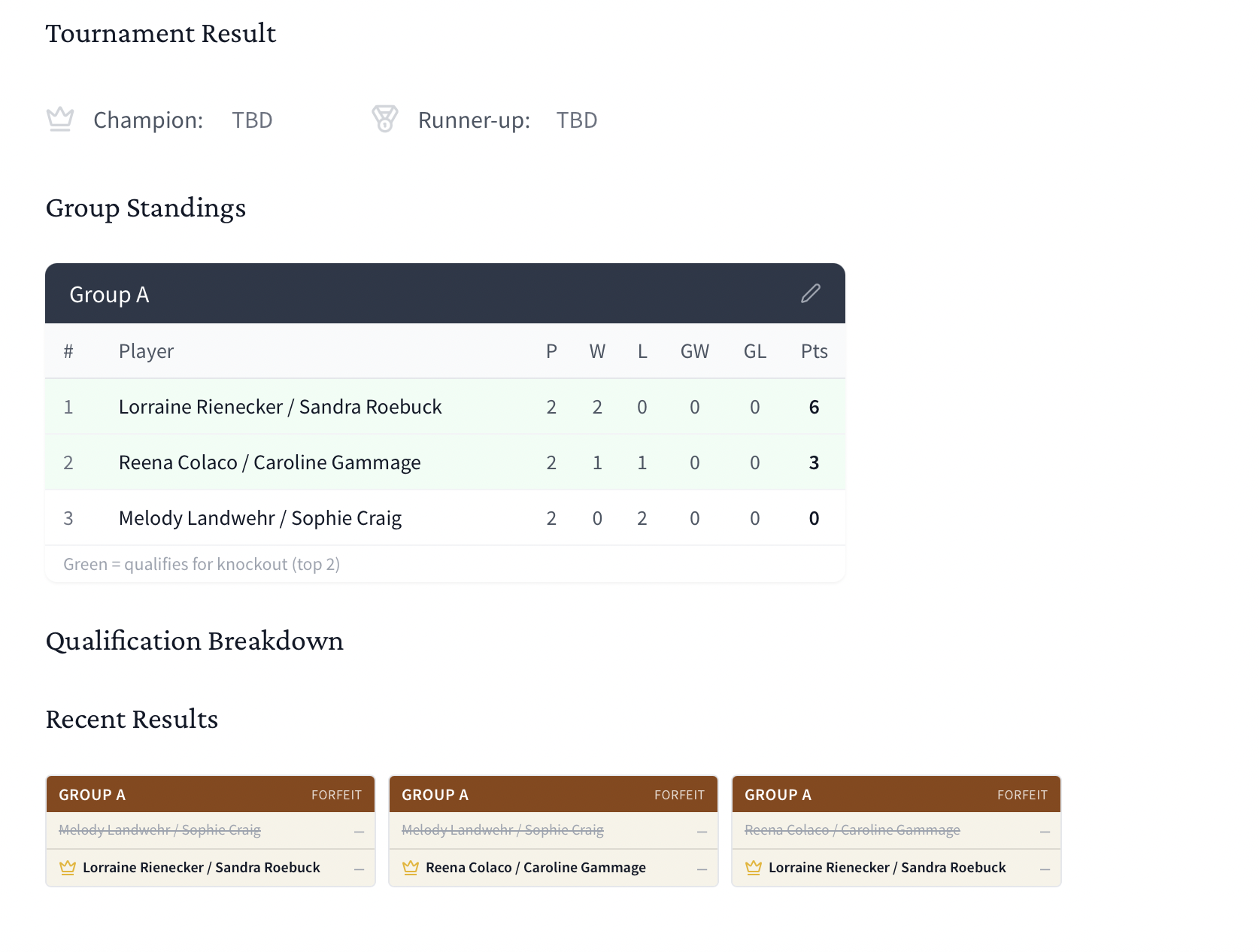
This is Mexicano's defining move and the fiddly bit that kills it on paper. After every round, Grex Social sorts the whole field by total individual points and re-seats players: top 4 to Court 1, next 4 to Court 2, and so on. Players see their new court on their phone before they've walked off the previous one. No whiteboard, no organiser pause.
- Auto re-grouping every round based on live standings
- Players see their next-round court in-app before they leave
- Fair sit-out rotation for uneven signups
- Final leaderboard published to all players at end of night
Under the hood
What Grex Social gives you.
- Automatic court re-grouping — after every round Grex Social sorts players by their current total and re-seats them across courts. No whiteboard.
- Pairing within each court by standings — choose 1st + 4th v 2nd + 3rd (balanced, the usual convention) or 1st + 2nd v 3rd + 4th; partnerships already played are avoided where the standings allow, so it stays social within the competitive framing.
- Live individual leaderboard — a single ranking updates the moment round scores are entered, so players see where they'll be seated for the next round in real time.
- Fixed points per match — every match plays to a set points total (16, 24 or 32 points between the two pairs). Same engine as Americano; switch per event.
- Handles 8 to 48 players across 2-12 courts — scales from a small club night to a tournament-style Mexicano across the whole facility.
- Fair sit-out rotation for uneven numbers — if you're not on an exact multiple of 4, Grex Social rotates the sit-out fairly so no one loses more rounds than anyone else.
- Score entry from the court — any player in the match enters the score; no confirmation step. No organiser transcribing paper scores between rounds.
- Runs alongside Americano and King of the Court — same event engine covers all three social formats; switch between them per event.
- In-app Stripe payments — collect entry fees (typically £5-£10 per player) direct to the club's bank account.
- Counts towards your ladder — mark a night as counting towards the club ladder so a regular builds a rolling ranking, not just single-night results.
- Free for players, free for clubs — Mexicano nights are included on every plan, including the free Community plan.
Looking for a tennis-club hub? Browse tennis clubs on Grex Social or read the social tennis guide for the full set of social-night formats.
FAQ
Common questions.
What is Mexicano tennis?
Mexicano is a social doubles tennis format where players rotate partners every round (like Americano) AND get re-grouped between courts based on their current score. After each round, the leaderboard is updated: the top four go to Court 1, the next four to Court 2, and so on. Partners still rotate within a court, so everyone plays with new people, but you're always matched with players at your current level. It's the format's biggest draw for clubs that want the social feel of Americano without the mixed-level pairings.
How is Mexicano tennis different from Americano?
Americano rotates partners round-by-round but keeps players on the same court all night — you play whoever you're paired with regardless of skill. Mexicano rotates partners AND re-groups players by score after each round. The result: in Americano, a strong player and a beginner might end up partnered mid-round; in Mexicano, you always play at your current level. Americano is purely social; Mexicano is social-plus-competitive. Grex Social supports both formats on the same engine — switch per event.
How many players do you need for Mexicano tennis?
You need at least two courts for Mexicano to work — the format's whole point is re-grouping between courts. Two courts (8 players) is the minimum; four courts (16 players) is the sweet spot; up to twelve courts (48 players) scales well for a club with the facilities. With only one court and 4 players, Mexicano collapses into Americano because there's nowhere to re-group.
How does the scoring work in Mexicano tennis?
Each player scores individually across every round, just like Americano. If you win a round 4-2, you add 4 games to your total; opponents each add 2. Your partner (who was on your team for that round) also adds 4, but they'll have a different partner next round. After each round, the whole field is sorted by individual total, and the top four go to Court 1 for the next round. The player with the highest total after all rounds wins the night.
How long is a round in Mexicano tennis?
Same as Americano — most clubs use first to 4 games (~20 minutes a round) as the default, which fits predictably into a 2-hour club night. A 20-minute timer is the alternative when you want the clock to drive turnover regardless of score. Predictable round lengths matter in Mexicano because the re-grouping step happens between rounds; a consistent clock means the whole night finishes on time even with the added shuffle.
How do you re-group players between rounds?
After every round's scores are entered, the leaderboard sorts players by total. The top four go to Court 1 as two pairs, the next four to Court 2, and so on. Manually this means a hand-drawn court sheet after every round, which is why Mexicano is a bear to run on paper. On Grex Social, the re-grouping is automatic the moment the last score of a round is entered — players see their new court on their phone before they've walked off the previous one.
How do you handle uneven player numbers in Mexicano?
Mexicano works best with exact multiples of 4 (8, 12, 16, 20, 24, 28, 32). If your signup lands on 10, 14 or 18, some players sit out each round. Grex Social's player-pool rotation ensures no one loses more rounds than anyone else, and the re-grouping accounts for the sit-outs so the leaderboard stays fair.
Is Mexicano tennis suitable for a mixed-ability club night?
Yes, actually more so than Americano. After round 1 (which is randomly seeded), Mexicano's re-grouping means improvers and experienced players are always separated by their current level. Improvers on Court 3 or 4 have fun matches at their pace; stronger players on Court 1 get the challenge. Nobody gets bracketed with someone way above or below them for more than a single round.
What software runs Mexicano tennis nights?
Grex Social is the all-in-one option — court booking (on the Club+ plan), Mexicano rotation + re-grouping + scoring, member matching, Stripe payments and ladder rankings in one system. Running Mexicano manually is possible but painful because the re-grouping step happens every round; software that automates it saves 5-10 minutes of pause between rounds, enough to fit an extra round into a fixed-length club night.
How much does it cost to run a Mexicano night on Grex Social?
Nothing for the club or its members — social sessions are included on every Grex Social plan, including the free Community plan. If you charge an entry fee (typically £5-£10 per player), it's collected in-app through Stripe and paid straight to the club's bank account, with a small service fee (2.5% + 30p) added on top for the player.
Can you mix Mexicano with other formats in one series?
Yes, through the club ladder. On Grex Social you can mark any Mexicano, Americano or King of the Court session as counting towards the ladder, and its results feed the same rolling ranking as your ladder challenges, tournaments, leagues and box leagues. Regulars get rewarded for consistency across formats, not just one-night winners.
Ready to run your first Mexicano night?
Free for players, and included on every club plan — the free Community plan too. Americano and King of the Court run on the same engine — try one, get all three.