King of the Court padel: rules, format, how to run one.
Winners hold the court, losers rotate off. Short, competitive mini-matches with a live queue and streak tracking — the most competitive of the padel social formats.
Try Grex Social freeThe 30-second version
Five things to know.
King of the Court is the most competitive of the padel social formats. Winners hold the court; losers rotate off and challengers step on. Points accrue over the night and the longest kingship streak takes the crown. Fast, short mini-matches keep the queue moving.
- Winners hold the court — the pair that wins a mini-match stays; losers rotate off and a new challenging pair steps on.
- Fast, short mini-matches — usually first to 7 or 11 points, or a fixed timer (3–5 minutes). Rounds turn over quickly, players are never idle for long.
- Individual scoring via points-per-win — each time you're on the winning side you earn points. Longest kingship streak often wins the night.
- Best for 8–16 players on one or two courts — needs a queue big enough to keep pressure on the kings but not so long that rotators wait too long.
- Competitive-social — sits between Americano and Mexicano — more challenge than pure Americano, less admin than Mexicano's re-grouping.
How to run a King of the Court night.
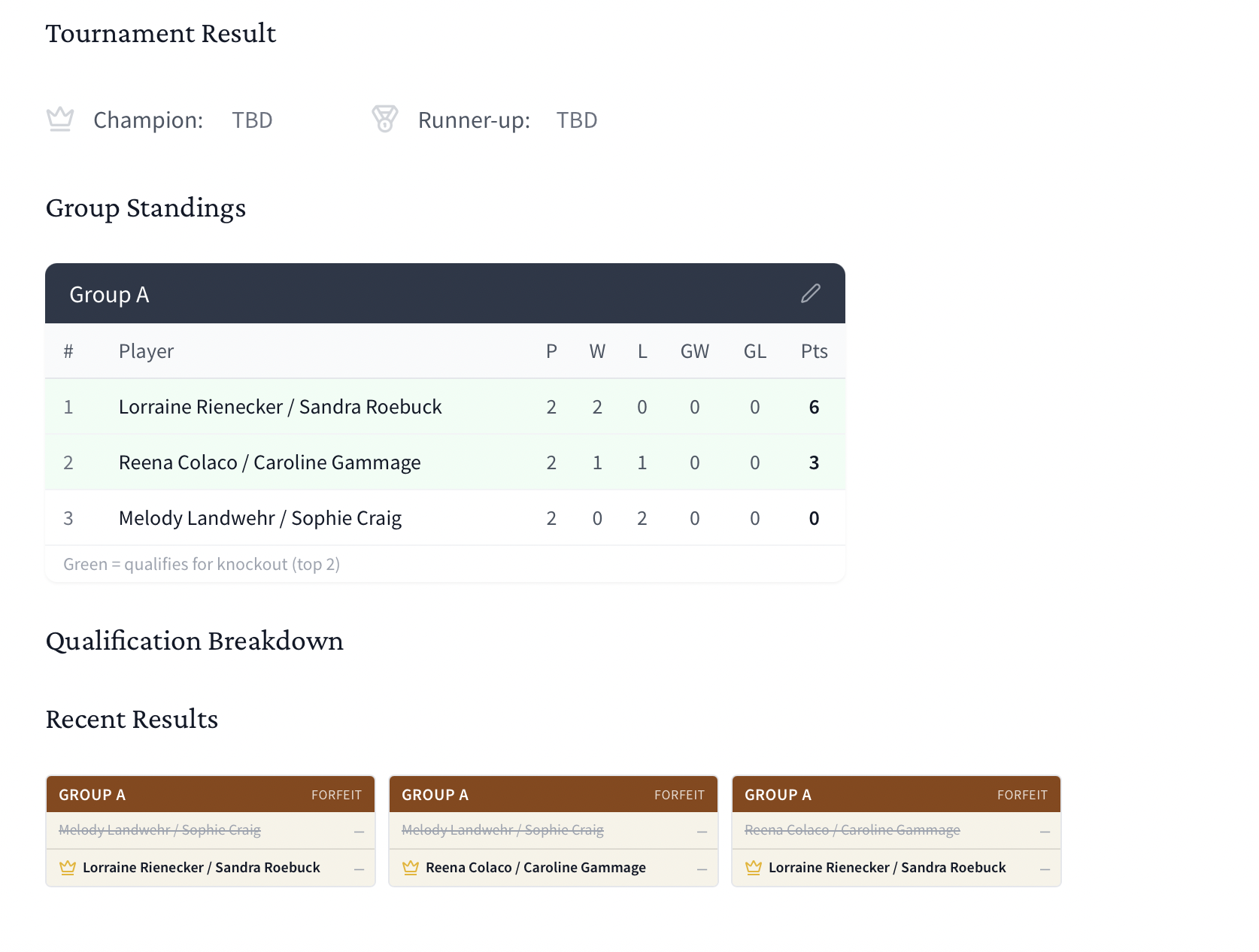
01 — Pick the mini-match rules
short target, quick turnover.
The event's rhythm depends on match length. First-to-7 delivers ~3-4 minute matches (great for 12+ player nights). First-to-11 gives ~5-6 minutes (more decisive scores, fits 8-10 players). Timed 4-minute matches guarantee turnover regardless of score. Set once at event creation and Grex Social handles the count.
- First to 7 points — fastest turnover, best for larger fields
- First to 11 points — more decisive matches, best for 8-10 players
- Timed 3-5 minute mini-matches — guaranteed turnover
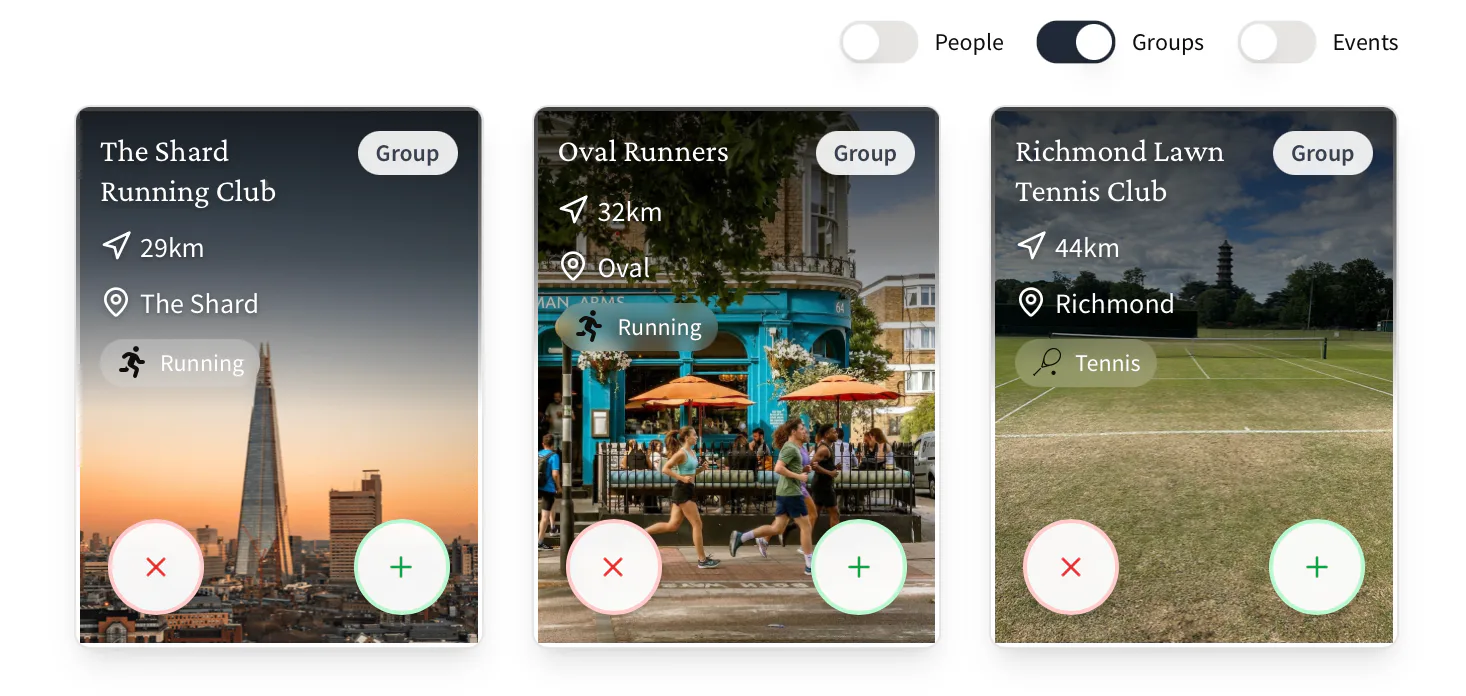
02 — Set the queue + partner rules
fixed pairs or shuffle after streaks.
Choose whether pairs stay together all night (simpler) or split after a streak of consecutive wins (more social). Partner-shuffle after 3 straight wins is the popular default because it prevents one strong pair from monopolising the court. Also set the queue-slot rules — usually 'first-in, first-out' with automatic latecomer append.
- Fixed pairs, or partner-shuffle after 3 consecutive wins
- Automatic queue with live positions on every player's phone
- Latecomers slot in at the tail — no manual queue-tampering
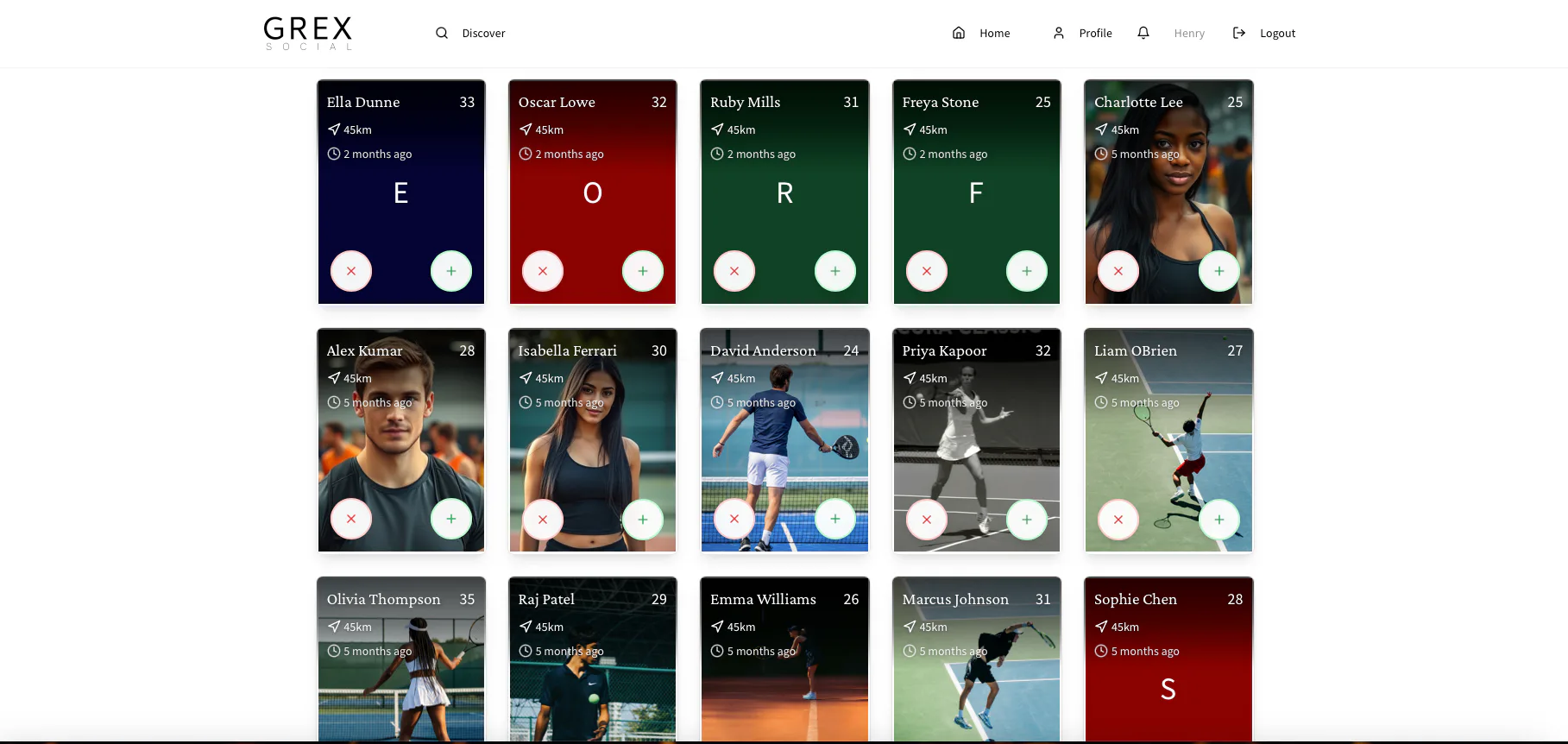
03 — Play + track streaks
winners stay, losers rotate, points accrue.
Each mini-match ends fast, someone confirms the score in-app, and Grex Social advances the queue automatically. The kings' streak counter ticks up on their leaderboard row; every player's cumulative points update in real time. Both the streak leader and the points leader are visible throughout so the players know who's chasing what.
- Winners hold; losers rotate to end of queue
- Live streak tracker per player
- Cumulative points leaderboard visible in-app
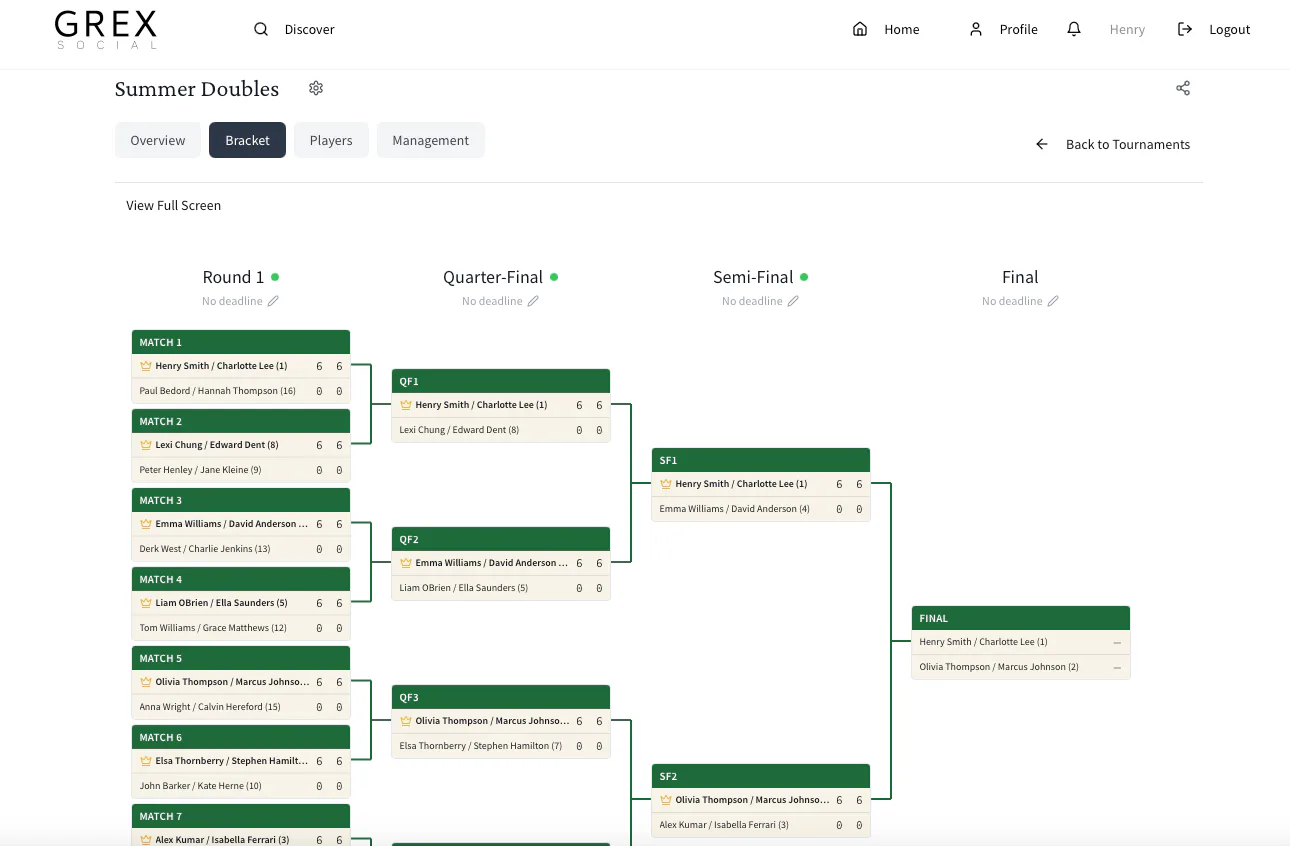
04 — Decide the winner
cumulative points, longest streak, or both.
Most clubs award the night to the highest cumulative-points player — that rewards consistency across many short matches. Longest kingship streak of the night makes a good second prize because it rewards a hot run without discounting the steady challenger. Grex Social publishes both leaderboards to all players at end of night.
- Cumulative points = the main winner
- Longest streak = the crowd-pleasing bonus prize
- Both leaderboards auto-publish to all players
Under the hood
What Grex Social gives you.
- Automatic queue management — Grex Social tracks who's on, who's next, and who's waited longest. No lost queue slot when someone nips off for a drink.
- Configurable mini-match target — first to 7, first to 11, or a fixed timer (3-5 minutes). Set once at event creation.
- Live streak tracker — every player's current kingship streak visible in-app; longest streak of the night usually wins.
- Points-per-win scoring — every win adds to your total; the leaderboard sorts by cumulative points, so the most consistent challengers rise even without the longest streak.
- Partner-shuffle option — winning pair splits after a set number of consecutive wins (usually 3), so no one holds the court all night off a single strong partner.
- Score entry from the court — winner enters, opponent confirms in a tap. Queue advances automatically.
- Handles 8-16 players per court — beyond that, split into two parallel KotC courts and combine leaderboards at end of night.
- Runs alongside Americano and Mexicano — same event engine covers all three padel social formats; switch between them per event.
- In-app Stripe payments — collect entry fees direct to the club's bank.
- Fair rotation for late arrivals — a player joining mid-event slots into the queue at the current tail; no reset.
- Rolling series scoring — link KotC nights into a Championship for a season-long ranking that mixes format winners.
- Free for players, £39-£69/mo for clubs — the Club plan covers KotC plus every other Grex Social competition.
FAQ
Common questions.
What is King of the Court padel?
King of the Court is a padel format where the winning pair holds the court and the losing pair rotates off. A new challenging pair from the queue steps on and plays a fresh short mini-match against the current 'kings'. If the challengers win, they take the court; if the kings win again, the challengers rotate off and the next queued pair steps on. It's a fast, competitive-social format that rewards streaks — the longest kingship of the night usually takes home the title.
How do you keep score in King of the Court?
Each mini-match is short — typically first to 7 points, first to 11 points, or a 3-5 minute timer. Scoring happens two ways at once: (1) individual points per win, so every match you're on the winning side adds to your cumulative total, and (2) live streak tracking, so the longest continuous kingship of the night is celebrated. Most clubs award the night to the highest cumulative-points player, with the longest-streak winner as a bonus prize.
How many players do you need for King of the Court?
Eight to 16 players on one court is the sweet spot — enough queue depth to keep pressure on the kings, but not so many that rotators wait more than a couple of minutes. With more than 16 players it's usually better to run two parallel KotC courts and combine the leaderboards at end of night. Fewer than 8 tends to collapse into just two pairs playing back and forth.
How is King of the Court different from Americano and Mexicano?
Americano rotates partners every round with everyone on the same court all night — pure social. Mexicano rotates partners AND re-groups players across courts by score — social plus level balance. King of the Court is a challenge format: winners stay, losers go, and the goal is to hold the court. It's more competitive than either — you're always trying to KEEP the court rather than just accumulating points quietly. Best for clubs where the members want a bit more edge in their social nights.
How long does a King of the Court night run?
A typical club KotC night is 90–120 minutes, with mini-matches turning over every 3–6 minutes. Over a two-hour session most players get 15-25 minutes of court time — comparable to Americano — but distributed as many short bursts rather than a few long rounds. This makes it well-suited to weekday evenings where members can't commit to a fixed match slot.
Do you play with the same partner or does the partner rotate?
Options vary by club. **Fixed partners for the night** is the simplest: signups pair up at the start and the pairs stay together. **Partner-shuffle after N consecutive wins** (usually 3) is more social — the reigning kings split after three straight wins and re-pair with fresh challengers. Grex Social supports both; the shuffle option is popular because it prevents one strong pair from dominating the whole night.
What happens with queue management?
The queue is the fiddly bit on paper — organisers lose track of who's next, players wander off between matches and lose their slot, latecomers get slotted arbitrarily. Grex Social's queue view is live on every player's phone: who's on, who's next, who's just been rotated off, current match score. Latecomers slot in at the tail automatically. Players know their exact position without asking the organiser.
Can King of the Court work with mixed abilities?
Yes, but with a caveat. In pure KotC, a stronger pair can dominate the court for a long streak, meaning weaker players get less time on. The partner-shuffle option (winners split after 3 consecutive wins) reduces this — it keeps the format competitive without letting one pair monopolise the court. Most clubs running mixed-ability KotC use partner-shuffle for this reason.
What software runs King of the Court padel?
Options include Grex Social (all-in-one club platform with KotC built in — same event engine as Americano and Mexicano), Padel Fast (has some KotC support), and manual whiteboards. KotC is genuinely hard to run manually because the queue is dynamic and streaks/points need tracking simultaneously — the software difference here is bigger than for Americano.
How much does it cost to run King of the Court on Grex Social?
Grex Social is free for players and £39-£69/month for the club (Club and Club+ plans, both with a 30-day free trial). There's no per-event fee. Player entry fees (typically £5-£10 per player) collected in-app through Stripe, direct to the club's bank account.
Can I run King of the Court alongside Americano and Mexicano in one series?
Yes. Grex Social's Championship feature lets you link a season of events across formats — a KotC night, a couple of Americano socials, a Mexicano tournament — into one rolling club leaderboard. This works well for clubs that want a season-long competition without running the same format twelve weeks in a row.
Ready to run your first King of the Court night?
Free for players; 30-day free trial on the Club plan. Americano and Mexicano run on the same engine — try one, get all three.